Understanding Terroir: How Nova Scotia's Unique Geography Shapes Its Wines
Nova Scotia's winds, soils, and cool coastal climate don't just grow grapes—they define the wines in your glass. Discover how terroir turns geography into flavor.
What Is Terroir, and Why Does It Matter?
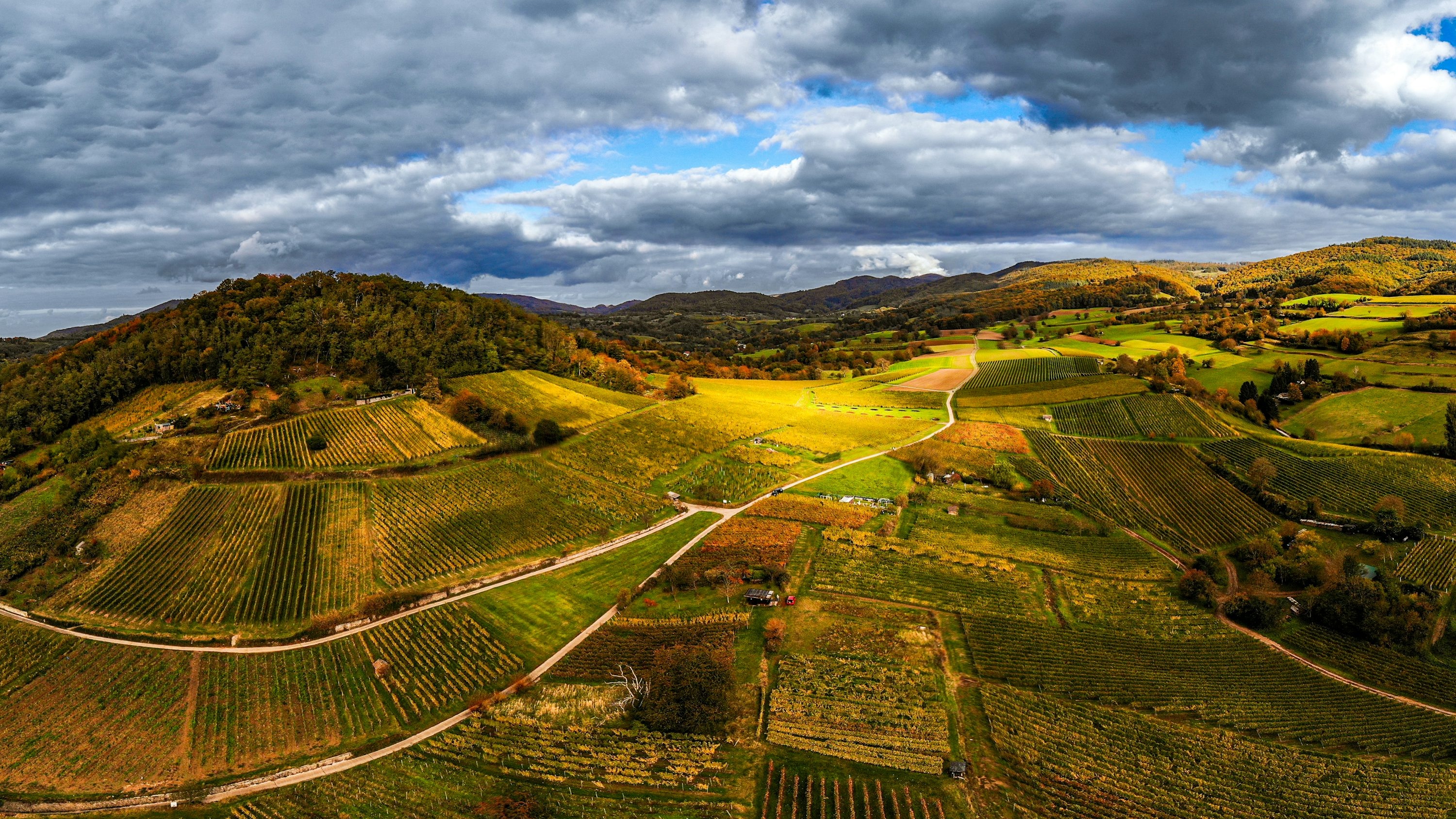
If you've spent any time around wine people, you've probably heard the word terroir thrown around with a kind of reverent hush. It's one of those French terms that sounds intimidating but describes something beautifully simple: the idea that where a grape grows shapes how a wine tastes. Terroir encompasses everything about a place — the soil beneath the vines, the slope of the land, the direction the wind blows, how much rain falls, how cold the nights get, how close the ocean sits. It's the reason a Riesling from the Mosel tastes nothing like one from Alsace, even though they're made from the same grape by equally skilled winemakers.
Think of terroir as a wine's fingerprint. No two places on earth share exactly the same combination of geography, geology, and climate, which means no two places produce exactly the same wine. And once you start understanding terroir, wine tourism transforms from casual sipping into something closer to reading a landscape. You stop just tasting a glass of white and start tasting a specific valley, a specific fog, a specific ancient seabed.
Nova Scotia has terroir that is genuinely unlike anywhere else in the wine world. It's not just different from France or California — it's different from Ontario, different from British Columbia, different from anything you've encountered before. To understand why Nova Scotia wines taste the way they do, you need to understand the place itself.
## The Maritime Foundation: Ocean as Winemaker
Nova Scotia is a peninsula nearly surrounded by water, and that fact defines everything about its wine. The province sits at roughly the same latitude as Burgundy and Bordeaux, which sounds promising until you realize that European wine regions benefit from continental warmth that Nova Scotia simply doesn't have. Instead, Nova Scotia is wrapped in the Atlantic, the Bay of Fundy, and the Northumberland Strait, each body of water playing a different role in shaping the growing season.
The maritime influence is a double-edged sword that Nova Scotia's best winemakers have learned to work with rather than against. Cool ocean air keeps summer temperatures moderate, which slows grape ripening in a way that preserves natural acidity. That's not a limitation — it's a gift. The bright, mouthwatering acidity in Nova Scotia wines, particularly in varieties like L'Acadie Blanc and Tidal Bay blends, is a direct expression of the ocean's cooling hand. In warmer climates, grapes ripen so quickly that acid drops before harvest, and winemakers often have to add it back artificially. In Nova Scotia, the acid is already there, built in by the climate itself.
The ocean also moderates temperature extremes. Coastal vineyards rarely experience the brutal summer heat spikes that can cook grapes in inland regions, and they benefit from the ocean's thermal mass in autumn, which extends the growing season just enough to allow grapes to develop complexity before the first hard frost arrives.
## The Bay of Fundy: The World's Most Powerful Tidal Engine
The Bay of Fundy deserves its own conversation because its influence on Nova Scotia wine is profound and specific. Home to the highest tides on earth — reaching over sixteen metres in some locations — the Bay of Fundy creates a microclimate effect along its shores that has no real parallel anywhere else in the wine world.
Those massive tides move an extraordinary volume of water twice a day, and all that moving water generates heat and moisture that radiates outward into the surrounding landscape. Vineyards along the Fundy shore, particularly those in the Annapolis Valley region, benefit from this thermal buffering effect. The bay essentially acts as a giant heat battery, absorbing warmth during the day and releasing it slowly through cool nights and into the shoulder seasons. This means spring arrives slightly earlier near the Fundy shore, and autumn frosts come a little later, extending the effective growing window in a province where every degree day counts.
The fog patterns generated by Fundy tides also play a role, though a complicated one. Morning fog can delay the onset of sun on the canopy, which winemakers manage through careful vine training and canopy management. But that same fog brings humidity that requires vigilant attention to fungal disease pressure — one of the real challenges of farming grapes in a maritime climate.
## The Annapolis Valley: A Sheltered World Between Two Mountains
The Annapolis Valley is Nova Scotia's most established wine region, and its geography reads like a textbook example of why topography matters in viticulture. The valley runs roughly east to west, sheltered on the north by the North Mountain ridge and on the south by the South Mountain plateau. These two elevated ridges act as windbreaks, creating a sheltered corridor that captures warmth and shields vines from the coldest north winds blowing off the Bay of Fundy.
The North Mountain, formed from ancient basaltic lava flows, is particularly significant. It blocks cold air drainage from the Fundy shore while also creating a rain shadow effect that gives the valley floor slightly drier conditions than the surrounding landscape. Wineries like Domaine de Grand Pré, one of Nova Scotia's oldest and most respected estates, sit within this sheltered zone and have built their reputation on varieties that thrive in the valley's specific warmth accumulation. Grand Pré's work with L'Acadie Blanc, New York Muscat, and their signature Tidal Bay blends reflects decades of understanding exactly what this valley can and cannot ripen successfully.
Benjamin Bridge, located in the Gaspereau Valley just east of the Annapolis Valley proper, has pushed the conversation about what Nova Scotia terroir can produce, particularly with their méthode traditionnelle sparkling wines. The fact that Benjamin Bridge has earned international recognition for sparkling wine is itself a terroir story — the cool climate and high natural acidity that once seemed like obstacles turned out to be precisely what you need to make world-class bubbles.
## Soil Stories: What Lies Beneath the Vines
Nova Scotia's soils are the legacy of glaciation, and they are extraordinarily varied across relatively short distances. The last ice age scraped, deposited, and rearranged the province's geology in ways that created a patchwork of soil types that would take a lifetime to fully map.
In the Annapolis Valley, you find a mix of glacial till, sandy loam, and clay-heavy soils depending on where you stand. The well-drained sandy and gravelly soils warm up faster in spring, which helps in a short-season climate, while the heavier clay sections retain moisture through dry spells. Slate and sandstone outcroppings appear throughout the region, and vines rooted in these rockier soils tend to produce wines with a mineral character that's difficult to define but easy to recognize — a kind of stony, almost saline quality that shows up particularly in L'Acadie Blanc and Tidal Bay blends.
The Gaspereau Valley has its own distinctive soil profile, with excellent drainage provided by the valley's topography and a mix of sandy and gravelly deposits left by glacial meltwater. This drainage is crucial because standing water during the growing season promotes root disease and dilutes the concentration that good wine requires. The Gaspereau's natural drainage essentially does work that winemakers in flatter regions have to accomplish through expensive underground tile systems.
## The Gaspereau Valley: Small, Specific, and Remarkable
The Gaspereau Valley deserves attention as a distinct terroir zone within the broader Nova Scotia wine landscape. Smaller and more intimate than the Annapolis Valley, the Gaspereau runs north to south and funnels cool air in a particular way that creates its own microclimate signature. The valley's orientation and its relatively narrow width mean that morning sun hits the slopes efficiently, and the well-drained soils shed excess moisture quickly after rain events.
Several of Nova Scotia's most ambitious producers have found a home here. Gaspereau Vineyards has been working this specific terroir for years, developing a particular expertise with aromatic whites that express the valley's cool-climate character. Their Riesling and L'Acadie Blanc consistently show the kind of precise, focused fruit and electric acidity that comes from a place where grapes ripen slowly and deliberately rather than in a rush of summer heat.
## The LaHave River Valley and Malagash Peninsula: Two Different Coastal Stories
Nova Scotia's wine regions extend beyond the Annapolis and Gaspereau valleys, and each outlying area adds another chapter to the terroir story. The LaHave River Valley on the South Shore sits in a notably warmer microclimate than much of the province, sheltered from the worst Atlantic exposure and benefiting from inland warmth accumulation. Vineyards here can ripen varieties that struggle elsewhere in Nova Scotia, and the wines often show a slightly richer, rounder character that reflects the additional heat units available.
The Malagash Peninsula on the Northumberland Strait is a completely different proposition. Sainte-Famille Wines, one of the province's pioneering estates, has been farming vines here since the 1970s, and the peninsula's terroir is defined by its exposure to the Northumberland Strait rather than the open Atlantic or the Bay of Fundy. The strait is shallower and warmer than the open ocean, which moderates the peninsula's climate in a particular way and creates conditions suitable for a range of hybrid varieties. The soils here have a higher salt influence from the coastal proximity, and some tasters identify a subtle briny quality in the wines that is a direct expression of the peninsula's geography.
## Growing Degree Days, Frost Risk, and the Art of Farming on the Edge
Nova Scotia sits at the northern edge of viable viticulture, and the numbers make that clear. The province accumulates somewhere between 900 and 1,100 growing degree days in an average year, depending on the specific site. For context, Burgundy accumulates around 1,200 to 1,400, and Napa Valley reaches well over 2,500. Nova Scotia is farming grapes in conditions that require every advantage the land can offer.
Frost risk is the constant companion of Nova Scotia viticulture. Late spring frosts can damage emerging buds, wiping out a significant portion of a year's potential crop in a single cold night. Early autumn frosts can catch grapes before they've finished ripening, forcing difficult decisions about whether to harvest early or gamble on warmer weather arriving. Wineries manage these risks through a combination of site selection, variety choice, and active frost protection. Planting on slopes rather than valley floors allows cold air to drain away from the vines, since cold air is dense and flows downhill like water. Many producers use wind machines or overhead irrigation systems that can coat vines in a protective layer of ice — counterintuitively, ice actually insulates buds from temperatures that would otherwise damage them.
The variety choices made by Nova Scotia producers are themselves a terroir response. L'Acadie Blanc, developed specifically for cool climate maritime conditions, is not grown here because it's fashionable — it's grown here because it works. Tidal Bay, the province's own appellation wine, is a blend category that allows producers to combine varieties in whatever proportion best expresses their specific site in a given vintage. That flexibility is a direct acknowledgment of how variable Nova Scotia's climate can be from year to year.
## How It All Comes Together in the Glass
When you taste a well-made Nova Scotia wine, you're tasting all of these factors simultaneously. The bright acidity comes from the maritime cooling effect and the slow, deliberate ripening that cool temperatures allow. The mineral quality comes from the glacially derived soils, the slate and sandstone that vines push their roots through in search of water and nutrients. The aromatic precision — the way a good L'Acadie Blanc or Tidal Bay can smell like apple blossom and sea spray and fresh-cut grass all at once — comes from the long hang time on the vine, the extended period during which grapes develop complexity without losing freshness.
The wines are not trying to be Burgundy or Bordeaux or anything else. They are trying to be Nova Scotia, and the best of them succeed completely. Understanding terroir means understanding that this is not a consolation prize — it's the whole point. A wine that tastes like its place is a wine that has something to say, and Nova Scotia's wines have a great deal to say about tides and glaciers and fog and the particular quality of light on a September afternoon in the Annapolis Valley.
That's why wine tourism in Nova Scotia is worth your time and attention. You're not just visiting wineries. You're reading a landscape that took ten thousand years of geological and climatic history to write.
Enjoy this article?
Get more wine stories and guides delivered to your inbox.
More Articles You Might Enjoy
Ice Wine and Late Harvest: Nova Scotia's Sweet Wine Treasures
From frozen vines to golden drops, Nova Scotia’s ice wine and late harvests turn winter’s chill into pure sweetness—discover how the magic is made.
A Wine Lover's Day Trip from Halifax: The Ultimate Itinerary
Escape Halifax for a day of vineyard views, cellar tastings, and rolling Annapolis Valley charm—an easy getaway that feels worlds away.
Sustainable Winemaking in Nova Scotia: Pioneers of Eco-Friendly Viticulture
From fog-kissed vineyards to forward-thinking wineries, Nova Scotia is redefining sustainable wine. See how eco-conscious growers craft exceptional bottles with a lighter footprint.